Understanding Ramen Noodle Hydration Ratios
Ramen Insight
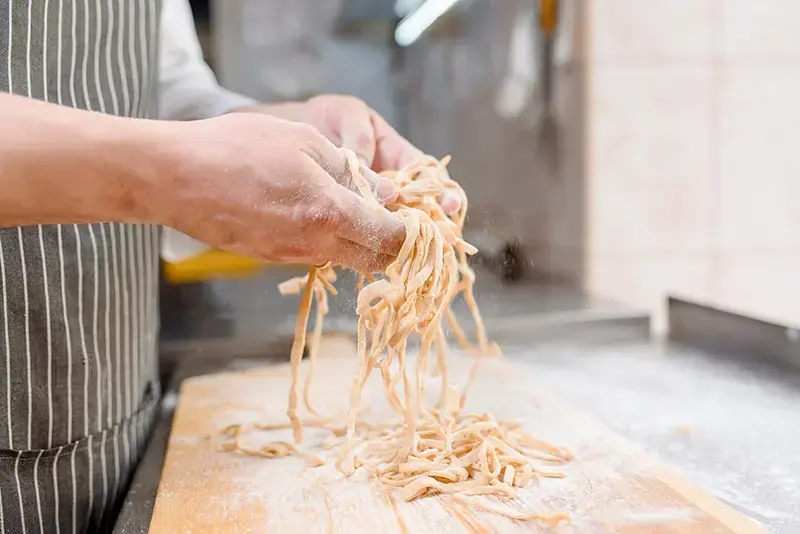
The hydration ratio of ramen noodles, which is the proportion of water to flour, significantly impacts the texture and characteristics of the noodles. It is typically expressed as a percentage of the weight of water relative to the weight of flour.
Range of Hydration Ratios for Ramen Noodles
-
Low Hydration (about 25%–30%)
Produces hard, elastic noodles with a chewy texture. Due to the low moisture content, the noodles are prone to drying and have strong firmness.
-
Medium Hydration (about 31%–36%)
Provides a balance of softness and chewiness, commonly used in many ramen shops.
-
High Hydration (about 37% or more)
Results in very soft noodles with a smooth texture. However, high moisture content makes the noodles more prone to breaking, requiring careful handling during manufacturing and cooking.
Effects of Hydration on Noodles
Overall, hydration ratio plays a critical role in balancing firmness, elasticity, and workability. Lower hydration produces firmer, chewier noodles, while higher hydration increases softness and smoothness but requires greater control during processing.
Learn More About Ramen Noodle Structure
Ramen noodles are defined by four key elements: flour, hydration ratio, noodle cut, and noodle shape.
To understand how these elements work together, start with the complete guide below.
• Ramen Noodles Explained
Explore related articles:
• Flour for Ramen Noodles
• Ramen Noodle Cut
• Ramen Noodle Shape