


2024 September 14
Ramen Noodle Cut Thickness
Ramen Insight
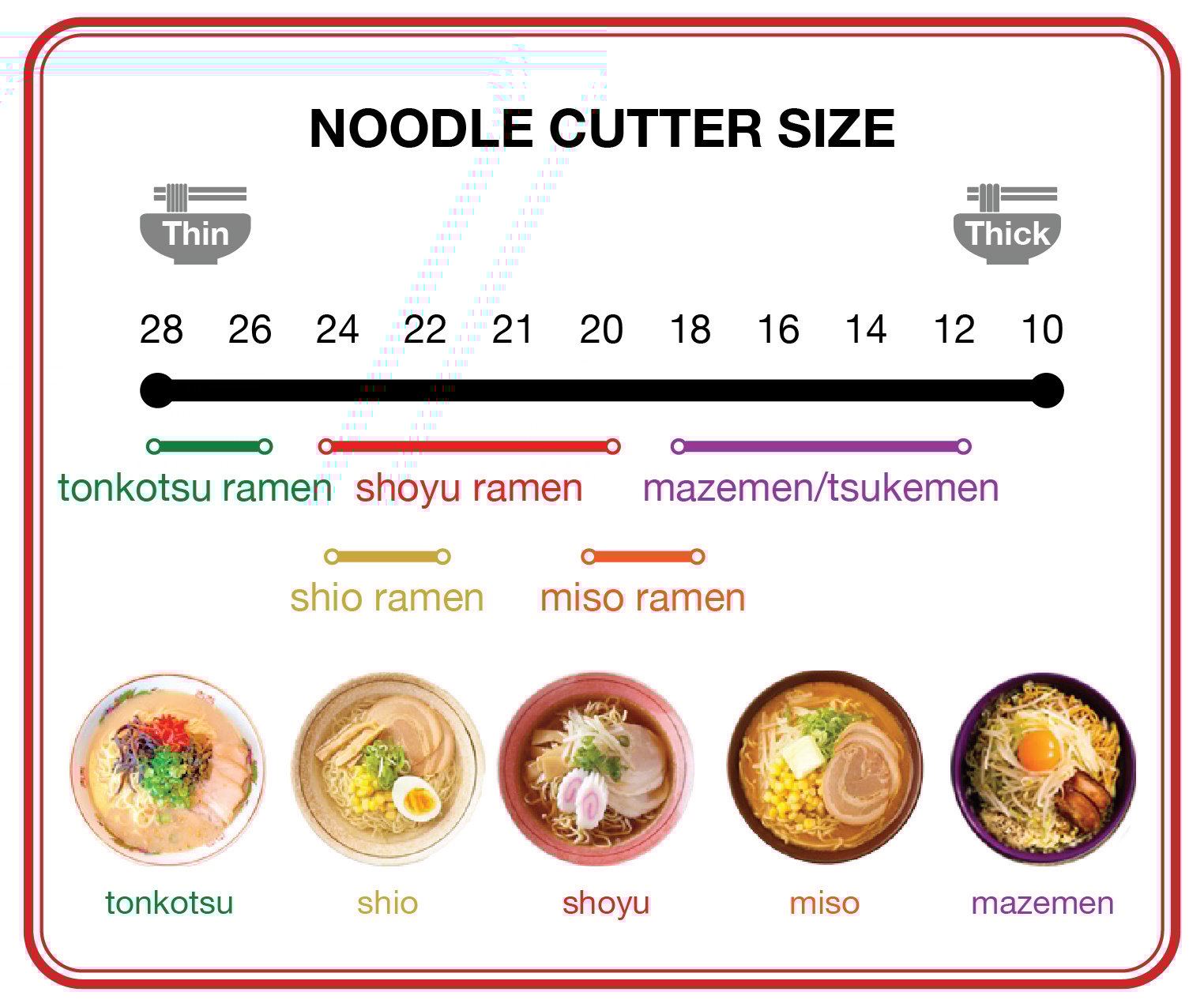
The thickness of ramen noodles is determined by the cutter blade size used during production. Different cutter sizes create noodles with different widths, allowing ramen shops to customize texture and eating characteristics for specific styles of ramen.
From very thin Hakata-style noodles to thick noodles used for tsukemen and hearty ramen dishes, noodle thickness is one of the key factors that defines how a bowl of ramen feels and performs. Understanding ramen noodle thickness provides a foundation for comparing different noodle styles and cutter blade numbers.

How Noodle Thickness Affects Soup Interaction
Thin noodles absorb soup quickly and are suitable for light broths. Thick noodles interact well with rich soups. Thin noodles are characterized by their soft, smooth texture, while thick noodles offer a satisfying chew. Each ramen shop selects the thickness of noodles based on the type of soup offered and the desired style of ramen, so it is common for the same shop to provide different types of noodles.
-
Thin Noodles: Cutter Blade Numbers #28 - #26
Commonly used in Hakata ramen from the Kyushu region, these noodles are characterized by their quick cooking time (within 45 seconds) and their gritty texture due to low hydration. -
Medium-Thin Noodles: Cutter Blade Number #24
A commonly used thickness nationwide, offering a balance of texture and ease of lifting the soup. Suitable for shoyu ramen or shio ramen. -
Medium-Thick Noodles: Cutter Blade Numbers #22 - #20
Frequently used in Tokyo ramen and Yokohama Ie-style ramen, these noodles offer a chewy texture. Cutter #22 is suitable for shoyu ramen, and #20 for miso ramen. -
Thick Noodles: Cutter Blade Numbers #18 - #14
Often preferred in tsukemen and Jiro-style tonkotsu ramen, these noodles excel at incorporating the soup, making them a great match for rich broths.
Learn More About Ramen Noodle Structure
Ramen noodles are defined by four key elements: flour, hydration ratio, noodle cut, and noodle shape.
To see how these elements work together, start with the complete guide below.
Explore related articles:
• Flour for Ramen Noodles
• Ramen Hydration Ratio
• Ramen Noodle Shape